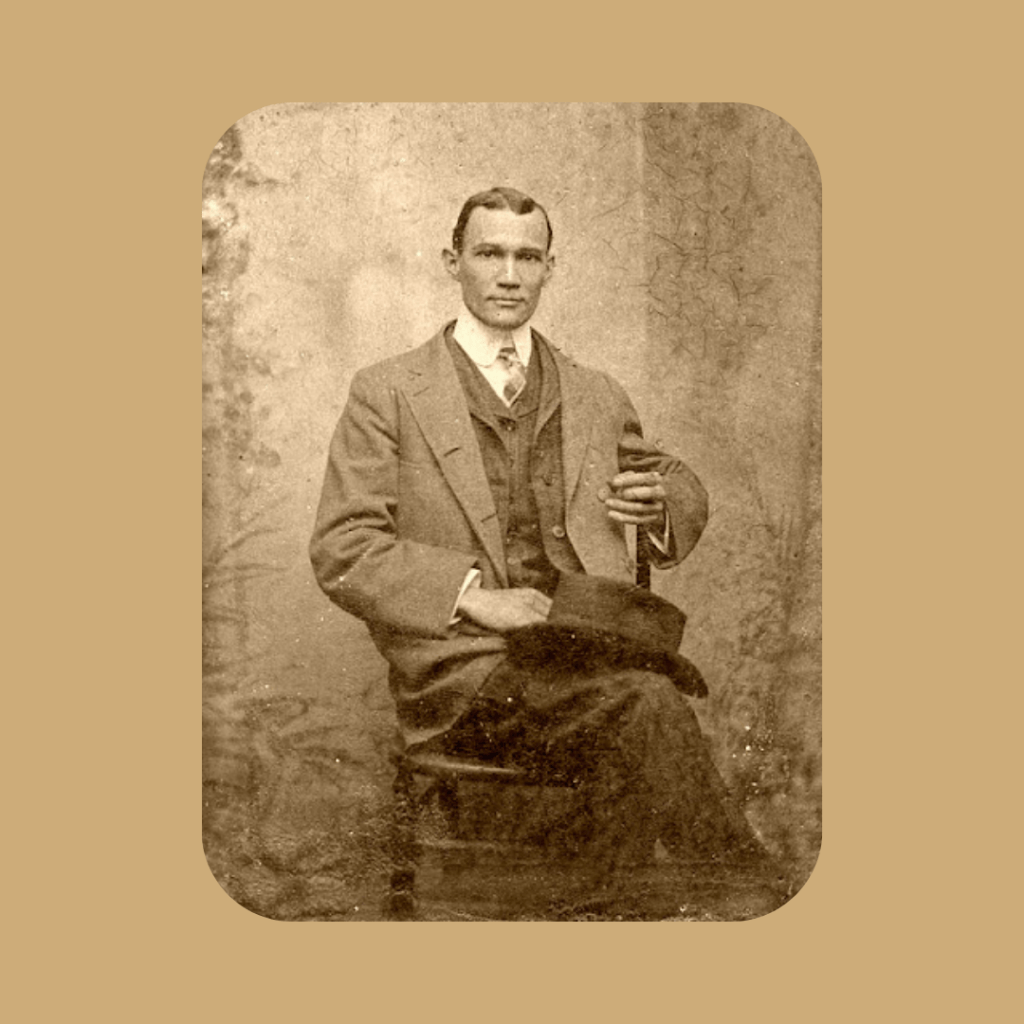
Last year, I enjoyed writing my article Everything You Need To Know About The Black Press.
And guess what I learned? You can’t describe an entire publishing history in just one story.
So I decided to share those achievements into an entire saga.
In this day and age where history is purposely being erased, this saga is going to pay homage to Black publishers who put their lives on the line to express the truth.
And we’re going to kick things off with a Black publisher whose editorial led to one of the largest race massacres in the 19th century: Alexander Manly.
The Manly Family
Alexander’s journey into publishing would start in Raleigh, North Carolina, where he was born on May 13, 1866, to two freed slaves. While little is known of his childhood, he was a descendant of Governor Charles Manly and Corinne Manly, who was enslaved to his grandfather.
Even though he came from a mixed ancestry, he attended Hampton University, the historically Black college in Virginia. After graduating, he moved to Wilmington and became the co-owner of the Daily Record with his brother, Frank.
The Wilmington Daily Record

In 1895, the Wilmington Daily Record was the only daily African American newspaper in the nation.
Not just in the state of North Carolina. The nation.
It was a progressive newspaper that advocated for the rights of Black people in every facet of society, from health care to civil rights.
The Daily Record was so successful that it attracted the interest of White advertisers. It was a well-respected newspaper to Black and White residents.
Around that time, Wilmington was a precursor to Tulsa, Oklahoma. It was the home of successful Black middle-class residents and business owners.
Similar to Tulsa, White residents were threatened by the success of the Black middle class. Particularly, Southern Democrats and segregationists who were terrified of the idea of relations between Black men and White women.
Racial and Political Tension
In 1897, Democrats were obsessed with regaining political control of the legislature. They began a smear campaign that catered to the feelings of White supremacists.
From 1897 to 1898, news outlets would depict Black men as violent brutes who would stop at nothing to rape White women. One speech in particular would change the trajectory of Wilmington forever.
That speech was given by Rebecca Felton, the first woman to serve in the United States Senate. Felton was a politician, White Supremacist, and slave owner who adamantly believed in lynching.
On August 11, 1898, Felton delivered her inflammatory speech in Tybee Island, Georgia. In front of the Georgia State Agricultural Society, she advocated that the number of lynchings increase to help protect rural White women from Black men.
In her eyes and the eyes of many White supremacists, lynching was the best way to protect the “woman’s dearest possession from the ravening human beasts.”
Alex Manly would issue the rebuttal heard around the country a week later.
Alex’s Brave Editorial

Manly used his newspaper to issue an editorial against Felton’s speech. In his editorial, Manly expressed that the fears of White women being raped by Black men were hypocritical coming from White men, seeing as they were guilty of raping Black women more frequently.
He also revealed that some Black men were biracial because of these interactions between White men and Black women.
Manly also argued that relations between White women and Black men were consensual – at least until the public became aware of these relations. Only then do White people refer to them as rape.
Manly not only denounced the stereotypical views of Black men as violent, sexually charged beings. He spoke the truth about the relationships between Black and White residents in North Carolina. The truth that many White residents knew was true but did not want to hear or read about.
He even referenced studies from Ida B. Wells, another Black journalist who dedicated her career to exposing the brutality of lynchings.
Manly left no stone unturned. He shed light on interracial relations in the South and, to no surprise, it came with serious consequences.
Wilmington Insurrection of 1898
Racial tensions skyrocketed after Manly’s editorial. White supremacists were more determined than ever to keep the races segregated. Democrats used his editorial to continue to generate rage and fear.
Alex and his brother endured verbal and underhanded threats. They were evicted from their newspaper building. Still, this didn’t stop White men from threatening to lynch the brothers and destroy the building.
Alex retaliated in his newspaper by demanding that the Black residents boycott White businesses.
While the backlash was severe, things became worse on November 8, 1898. Before the election, a group of White supremacists known as The Committee of Twenty-Five threatened to remove Manly and other prominent Black leaders from Wilmington if the Democrats lost.
Two biracial fusionist (Republican and Populist) candidates were elected as Wilmington’s mayor and council. This led to a coup d’etat, where the Democrats overthrew the government to regain control of the state legislature.
This event became known as the Wilmington Insurrection of 1898, the only successful coup d’etat in American history.
Once the Democrats overturned the city government, the Committee issued an ultimatum to Alex and Frank. They warned that they had until November 10 to leave Wilmington or face the mob’s wrath.
However, the Committee didn’t wait until November 10th to search for the brothers. They arranged a “pre-lynching mob” and went looking for them.
Fortunately, the two brothers left town before the mob reached them. They left Wilmington and never looked back.
Massacre
Unfortunately, the other Black Wilmington residents weren’t as lucky. The mob of nearly 2,000 men went into Black neighborhoods and businesses and destroyed everything.
It’s estimated that nearly 300 Black men, women, and children were killed throughout the massacre. Another hundred had to hide in nearby swamps to escape the mob.
All in all, 2,000 residents had to evacuate the city and never return. The destruction done to The Daily Record is still felt to this day. The land where the newspaper once remained is still vacant.
Life After Wilmington

Following the Wilmington Insurrection, the Manly brothers moved to Washington D.C. Alex married Caroline Sadgwar, the daughter of community leader Frederick Sadgwar, Jr. The two were wed at the residence of Congressman White in Washington D.C.
The Wilmington Insurrection didn’t scare Alex from the publishing industry. He and Caroline later moved to Philadelphia where they would have two sons.
He would become the leader of the Afro-American Newspaper Council. From there he would found the Armstrong Association, a predecessor to the National Urban League.
Still, the aftermath of the Wilmington Insurrection haunted the Manly family. While Alex started the Afro-American Newspaper Council, he also had to work as a painter to provide for his family.
He and Frank were able to start families in other states, but they lost the property that they had in Wilmington. They were able to return to Wilmington a couple of times before their deaths, but in disguise.
They paid the ultimate price for defending their community against a racist smear campaign.
Final Thoughts
Alex Manly’s life and career are inspirational and relatable.
Even today, some media outlets use divisive tactics to promote their agendas. As a writer or a content creator, you might find yourself in a position where you have to address ignorant remarks.
But when you do, think of Alex Manly’s example. Even though Alex stated that some White supremacists took his editorial out of context, it still didn’t make it any less true.
Understand that some people may do that with your work. They will take your words or content and take it out of context. But that doesn’t mean that you stop telling the truth.
Also, remember that there is still life after the backlash. While the Wilmington Insurrection of 1898 was tragic, Alex and his brother continued to participate in activism. While the loss of their newspaper was a substantial blow to the family, they still made contributions to the publishing industry.
More importantly, there are still descendants of the Black Wilmington residents (including the Manly family) who can share what happened to their ancestors.
Hopefully shedding light on this incident can lead to reparations for the descendants of the victims.
What are your thoughts on Alex Manly and the Wilmington Insurrection? Share in the comments below.
Sources:
Hill, M. and Umfleet, L. (2009, August 29). Alex Manly. NCPedia. Retrieved from Manly, Alex | NCpedia.
First Image taken from ipernity: Alex Manly – by Kicha.


Leave a Reply